For all the justified excitement about ChatGPT’s unprecedented growth trajectory, with 800 million weekly active users represents one of the fastest consumer adoption curves in technology history, OpenAI faces a problem that should be familiar to anyone who has studied the evolution of Internet business models. That is, they have aggregated demand without monetizing it.
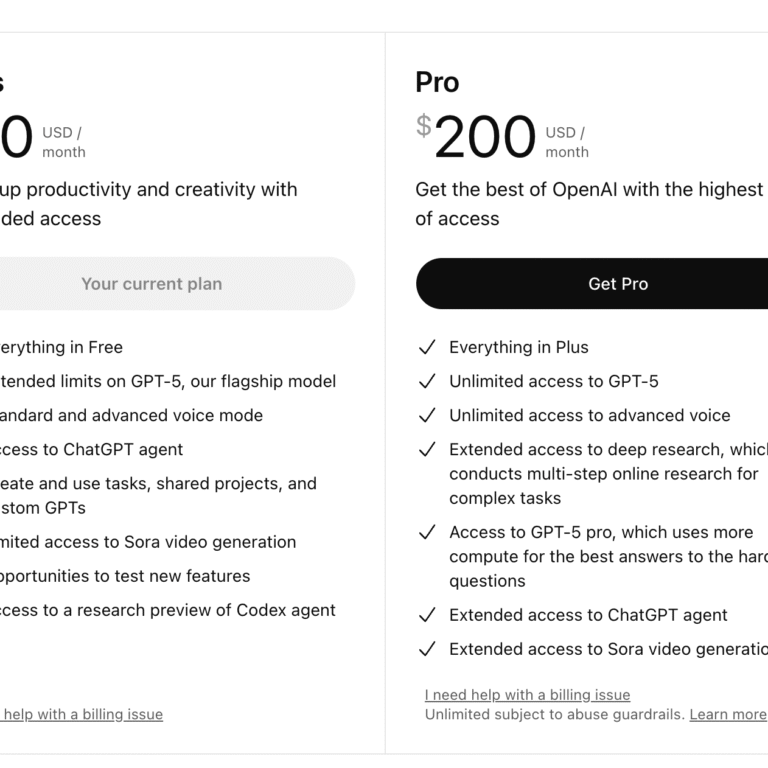
The numbers tell a stark story. With approximately 40 million premium subscribers at $20/month, OpenAI has built a $10 billion annual run-rate business. Impressive, certainly. But that represents only 5% of their user base. The remaining 760 million weekly active users cost money to serve, significant money, given the computational intensity of large language models, while generating zero revenue. For a company reportedly seeking a $150 billion valuation and eyeing a path toward becoming a trillion-dollar enterprise, this is a vulnerability.
The aggregation imperative
The defining characteristic of the most valuable Internet companies has been their ability to monetize attention at scale. Google didn’t become a trillion-dollar company by charging users $20/month for search. Facebook didn’t reach its valuation by hoping 5% of users would upgrade to a premium tier. They understood a fundamental truth about Internet economics. When you aggregate demand at an unprecedented scale, advertising represents the only business model capable of capturing commensurate value.
OpenAI has accomplished the demand aggregation. ChatGPT’s 800 million weekly active users represent the kind of audience scale that advertising businesses are built upon. The comparison to Google is instructive. When Google reached similar levels of engagement, it had already built an advertising engine capable of generating tens of billions in revenue. OpenAI, by contrast, has built a subscription-only model that deliberately ignores 95% of its addressable market.
The counterargument, that OpenAI’s mission and brand preclude advertising, is strategically naive. Every major Internet platform initially positioned itself as somehow above or beyond advertising. Google was about organizing the world’s information. Facebook was about connecting people. Youtube was about broadcasting yourself. All eventually recognized that mission and monetization are not mutually exclusive; indeed, advertising can subsidize mission by making the product accessible to billions rather than millions.
The path dependency problem
The challenge OpenAI faces is not whether to implement advertising, but rather how much more expensive the delayed implementation becomes with each passing quarter. Every day OpenAI operates with a 95% non-monetized user base, they are training their users to expect free access while simultaneously training competitors to exploit the opening they’ve created.
Consider the strategic landscape. Meta has announced plans to integrate AI capabilities across their product suite, backed by an advertising infrastructure that already generates over $100 billion annually. Google has search distribution and advertising technology that makes monetizing AI interaction trivial. Even smaller players like Perplexity are experimenting with advertising models. OpenAI’s competitors are not asking whether to monetize free users through advertising, but they’re racing to prove the model works before OpenAI wakes up to the opportunity.
The window for OpenAI to define what AI-era advertising looks like is closing. First-mover advantage in advertising models matters enormously. Google defined what search advertising meant. Facebook defined social advertising. TikTok defined short-form video advertising. The company that defines AI conversation advertising will create the template that others follow and will capture the economic surplus that comes from setting that standard. OpenAI is letting that opportunity slip away to competitors with more mature monetization sophistication.
The economics of scale
The computational economics of large language models make the advertising case even more compelling. Unlike traditional Internet services, where marginal costs approach zero, serving ChatGPT queries costs real money, with estimates suggesting somewhere between $0.01 and $0.05 per conversation, depending on model size and conversation length. At 800 million weekly active users, even modest engagement rates translate to hundreds of millions in monthly compute costs.
An advertising-supported tier solves this problem elegantly. Industry benchmarks suggest that engaged users on advertising-supported platforms generate between $5 and $50 per year in ad revenue, depending on engagement levels and targeting sophistication. Even at the conservative end, say $10 per user annually, OpenAI’s 760 million non-premium users represent a $7.6 billion annual revenue opportunity. That’s nearly the size of their entire premium subscription business, but what is more important is just the beginning of more opportunities.
Moreover, advertising revenue scales with engagement in ways subscription revenue cannot. A user who upgrades to premium generates $240 per year. That’s the ceiling. But a highly engaged user in an advertising-supported tier might generate $50, $100, or more annually through ad impressions and they don’t have to make the psychological commitment of a paid subscription. OpenAI is leaving billions of dollars on the table by refusing to build this revenue stream.
The trillion-dollar imperative
The path to a trillion-dollar valuation requires trillion-dollar thinking about addressable markets. Five percent conversion to premium subscriptions would be spectacular in most SaaS contexts, but OpenAI is not a SaaS company. They are a consumer Internet company with a consumer Internet scale. The most valuable consumer Internet companies monetize attention, not subscriptions.
Consider the mathematics. To justify a $150 billion valuation, let alone a trillion-dollar one, OpenAI needs to demonstrate a pathway to $20-30 billion in annual revenue. Premium subscriptions, even with aggressive growth, will struggle to exceed $15-20 billion given the natural ceiling on subscription willingness-to-pay. But advertising revenue at scale? Google generates over $200 billion annually. Meta generates over $100 billion. Even Snap, with far less engagement than ChatGPT, generates $4.5 billion from advertising.
OpenAI’s current business model is optimized for a $20-50 billion company. To become a trillion-dollar company, they need to monetize attention at scale. That means advertising. The only question is whether they’ll recognize this necessity while they still have the strategic flexibility to implement it on their own terms or whether they’ll be forced to react to competitors who got there first.
The advertising case is about recognizing that when you’ve aggregated 800 million weekly active users, you have a responsibility to build a business model commensurate with that achievement. Every day OpenAI delays is a day they burn cash serving non-monetized users while competitors build the advertising infrastructure that will define the AI era. For a company with trillion-dollar ambitions, that’s not a liability that can take the whole market with it, ie. going down. (= bubble)